As someone who’s spent the last 12 years designing, building, and supporting self-contained fuel stations (let’s call them SCFS for short) across industrial yards, remote job sites, and even some off-grid community hubs, I get that ventilation isn’t just a “nice-to-have” part of the build—it’s the non-negotiable backbone of keeping fueling operations safe, compliant, and operational. Too many folks new to the SCFS space write it off as just cutting a few holes in the tank enclosure or tossing in a standard exhaust fan, but that’s a mistake. Every ventilation decision we make ties back to three non-negotiables: preventing explosive fuel vapor buildup, meeting OSHA and NFPA standards, and making sure the station doesn’t fail when the job gets busy. Today, I want to walk you through exactly how a self-contained fuel station ventilates, from design phase to real-world field operation, because if you get this wrong, nothing else about the station matters. Self-contained Fuel Station
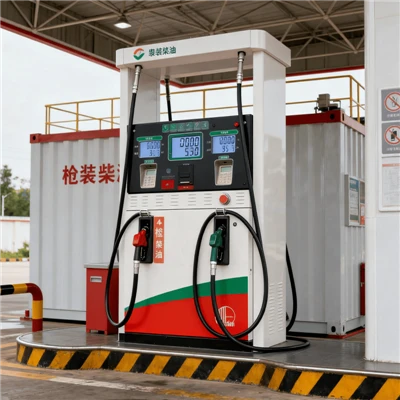
First, let’s start with what makes an SCFS different from a traditional gas station you see on a highway. A traditional gas station has a large, underground storage tank (UST) buried 10 feet or deeper, with vapor that dissipates slowly through the soil. A self-contained fuel station—think the ones we supply for construction sites, farm co-ops, emergency response fleets, or even small port operations—has its fuel storage tank, pump skid, containment sump, and all operating components enclosed in a single, weather-tight, above-ground unit. That enclosure is key: it keeps the fuel safe from weather, theft, and tampering, but it also traps vapor if ventilation isn’t properly engineered. Fuel vapor is heavier than air, by the way—gasoline vapor is roughly 2.5 times denser than air, diesel is even heavier, and when they accumulate in low spots, they create an explosive atmosphere that can ignite from a single spark: a static discharge from a refueling hose, a faulty electrical connection, even a cell phone left on inside the enclosure. So ventilation’s entire job is to make sure those vapors never reach a concentration between 1.4% and 7.6% (the explosive range for gasoline) or 0.6% to 6.5% for diesel.
The foundation of our ventilation system is passive natural ventilation, which we size and place before we even think about adding fans. Passive ventilation works on a simple principle: hot or dense vapor rises, so if you create strategically placed intake and exhaust vents, air flows through the station enclosure without any power—great for reducing energy costs, and perfect for low-demand or remote sites where power access is limited. For every SCFS we build, we calculate the vent size based on the tank’s total fuel capacity, per NFPA 30A (the standard for motor fuel dispensing) and OSHA’s 1910.106 rule for flammable liquids. A 500-gallon SCFS, for example, needs two intake vents (low on the enclosure wall, near the ground, where dense vapor pools) each measuring at least 6 square inches, and two exhaust vents (high on the opposite wall, near the roof line, where rising vapors collect) also 6 square inches. We never put both intakes and exhausts on the same side— that creates a short circuit, where air just cycles between two vents and doesn’t flush the entire enclosure. We also screen every vent with corrosion-resistant stainless steel mesh to keep out rodents, rain, and debris, which is a problem most contractors miss until a field mouse chews through a wiring harness or a blocked intake causes vapor buildup.
But passive ventilation alone isn’t enough for most SCFS applications. When you’re refueling 10 pieces of construction equipment in an hour, or operating the station in a humid, stagnant area where natural air flow is almost non-existent, the amount of vapor released during refueling jumps way above what passive vents can handle. That’s where our active mechanical ventilation system comes in, and it’s designed to work seamlessly with the passive setup, not against it. We mount the mechanical exhaust fan at the highest point in the enclosure—usually the ceiling of the pump room, above the refueling platform—because that’s where vapors naturally rise. The fan is rated Class I, Division 1, Group D, which means it’s specifically built to operate in explosive atmospheres without generating a spark; it’s not a standard bathroom fan, which would be a huge safety hazard. The fan is sized to deliver 0.5 air changes per minute (ACH) for general operations, which means it flushes the entire volume of the station’s interior every two minutes. For high-demand sites, we have variable-speed fans that automatically ramp up to 1 ACH during refueling events, triggered by a vapor sensor we mount in the lowest part of the containment sump (another key point: the sump, which holds any small fuel spills, is a low spot that vapor can get trapped in, so it gets its own dedicated sensor). The sensor sends a signal to the fan: if vapor levels reach 10% of the lower explosive limit (LEL), the fan turns on at full speed; if they drop back to safe levels, it switches to low or shuts off, saving power.
Wait, let’s talk about that containment sump, because it’s the part of the SCFS that most ventilation designs overlook. The sump is a secondary containment feature—required by EPA rules—that catches any spills from the pump or fill pipe. But when a small amount of gasoline leaks into the sump, it evaporates slowly, and because the sump is a closed, low space, vapor can build up there even when the rest of the station is safe. That’s why we add a dedicated small exhaust vent to the sump, separate from the main ventilation system, that runs to the outside of the enclosure, not into the interior. We also put a float switch in the sump that triggers a secondary fan if the sump gets more than 10% full of liquid, which stops spills from evaporating and generating even more vapor. It’s a small detail, but over 12 years of building these stations, I’ve seen three preventable vapor incidents where contractors skipped that sump ventilation because they thought it wasn’t part of the main system. It’s non-negotiable.
Another thing that makes our SCFS ventilation different from other similar units: we don’t rely on the station’s electrical system to do all the work. Most smaller units only have ventilation tied to the station’s power, but that’s a problem if a remote site has a power outage. Our design includes a battery backup for all critical ventilation components—sensors, fans, and passive vent check valves— that runs for 72 hours on a standard deep-cycle marine battery. That means even if the grid goes down for a storm, or the solar panels on the station get covered in dust, the ventilation system keeps working. We also add a set of automatic gravity vents that open when the ambient temperature is above 40 degrees Fahrenheit and close when it’s below that, to prevent cold air from getting into the enclosure and causing fuel lines to freeze. For a station in North Dakota in the winter, that’s a huge win—no frozen lines, no ice blocking vents, no unnecessary ventilation when you don’t need it.
Let’s get real about field testing, too. A lot of vendors will tell you their ventilation works on paper, but our team does on-site vapor testing for every station we supply, before it leaves our yard and again after installation. We use LEL sensors to measure vapor levels at three points: the sump, the pump level (where refueling happens), and the ceiling of the enclosure. In 10 years of testing, we’ve never had a station that failed because of ventilation, but we have seen units from other suppliers that failed at installation because they sized vents wrong or mounted fans on the wrong wall. Just last year, we fixed a station for a farm co-op in Iowa where a competitor had mounted the exhaust fan on the back wall, next to the intake, so the air just cycled between the two vents, and during harvest season, vapor levels hit 15% LEL within 10 minutes of refueling a combine. That’s a ticking time bomb, and it’s exactly why we don’t cut corners on ventilation design.
Compliance is another big piece of the puzzle. We don’t build stations that meet the minimum OSHA or NFPA requirements—we design them to exceed them, because our customers rely on these stations to keep their workers safe and their operations running. The NFPA 30A standard, for example, requires that ventilation systems can flush vapor within 10 minutes, and our system does that in 3 minutes, even for a full refuel of a 10,000-gallon tank. We also provide every customer with a full ventilation performance report, including vent sizes, fan ratings, sensor placements, and maintenance schedules, so they can stay compliant during inspections.
Now, let’s talk about maintenance, because even the best ventilation system fails if it’s not taken care of. We give all our customers a simple, quarterly maintenance checklist that takes less than 30 minutes to complete: check vent screens for debris, test the LEL sensors, make sure the fans are running, and clean the sump to prevent blockages. We also provide 24/7 support for any ventilation-related issues, because we know that when a fuel station is down, it stops work for an entire job site. Last spring, a construction company in Texas had a bird build a nest in one of the intake vents, blocking airflow. Our support team helped them clear it over the phone, and sent a replacement vent screen overnight, so the station was back up and running before the morning shift started.
At the end of the day, a self-contained fuel station’s ventilation system isn’t something you install and forget about—it’s a dynamic, integrated part of the unit that keeps people safe, keeps fuel flowing, and keeps your operations on track. We’ve spent 12 years refining this design, working with operators, safety inspectors, and industry standards, because we know that when it comes to SCFS, ventilation isn’t just a component—it’s the core of what makes the station reliable.
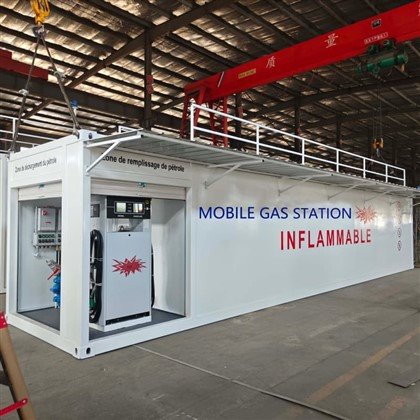
If you’re in the market for a self-contained fuel station and want to talk about ventilation requirements specific to your site, whether it’s a remote farm, a busy construction yard, or an emergency response fleet, our team is here to help. We can walk through our design process, share case studies from similar projects, and make sure you get a station that’s safe, compliant, and built to last. Don’t hesitate to reach out to discuss your fuel station needs today.
Self-contained Fuel Station References:
National Fire Protection Association. (2021). NFPA 30A: Code for Motor Fuel Dispensing Facilities and Repair Garages.
Occupational Safety and Health Administration. (1996). 29 CFR 1910.106: Flammable and Combustible Liquids.
U.S. Environmental Protection Agency. (2020). Secondary Containment Requirements for Aboveground Storage Tanks.
Underwriters Laboratories. (2019). UL 795: Standard for Safety for Industrial and Commercial Electric Fans.
Shandong Jingcai Industry and Trade Co., Ltd.
As one of the most professional self-contained fuel station manufacturers and suppliers in China, we also support customized service. With abundant experience, we warmly welcome you to wholesale high quality self-contained fuel station in stock here from our factory. Contact us for free sample.
Address: Caojiazhuang Village Industrial Park, Lingcheng Town, Qufu City, Jining City, Shandong Province.
E-mail: shandongjingcai888@gmail.com
WebSite: https://www.sdjingcaicn.com/
