Hey everyone, it’s Jake from your go-to PVC ceiling panel supplier – and today, we’re diving into a question I get at least twice a week: Are PVC ceiling panels actually good for commercial spaces? Let’s cut through the noise, skip the sales jargon, and talk real, real stuff. Because when a café or a small retail shop or even a local gym hits me up, they’re not asking for a fancy brochure – they’re asking, “Will this hold up? Will it make my space look good? Will it not cost me an arm and a leg?” I’ve installed these panels in everything from a 24-hour laundromat that floods weekly to a boutique fitness studio where members drag sweaty gear around, so I’ve seen the good, the “wait, that’s not a problem” and the “oh, so that’s why some people hate these” sides. Let’s start with the basics, no boring textbook stuff. PVC Ceiling Panel
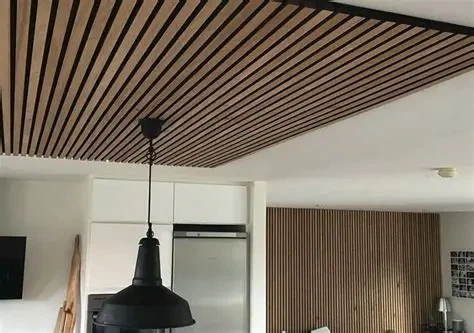
First off, let’s talk about the big one for commercial spaces: moisture. If you’ve ever been in a commercial bathroom, a break room near a dishwasher, or a pool area, you know mold and mildew aren’t just annoying – they’re a health hazard. Drywall? It soaks up moisture like a sponge, gets soft in a year, and before you know it, you’re patching holes or replacing whole sections. Old drop ceilings? They hold water, develop yellow stains, and turn into a breeding ground for bacteria. PVC panels, though? They’re 100% non-porous. That means water, steam, even cleaning spray doesn’t seep in. I had a client last year who runs a tiny 10-chair nail salon – their bathroom used to have drywall that grew black mold within 6 months. We put up PVC panels in 2 hours, no drywall prep, and 18 months later, there’s zero discoloration. Not even a little spot. And for commercial spaces where OSHA or local health codes are strict? This is a huge win. No porous material means no hidden mold, no need for super heavy-duty mold treatments every month.
Next up, durability – because commercial spaces get beat up. Not just foot traffic, but equipment, carts, kids, the random overzealous cleaner with a too-scrubby pad. PVC panels are rigid, way more than people think. People often confuse them with flimsy pool liner stuff, but our commercial-grade panels (the ones I only sell for spaces like offices, retail, or gyms) have a high impact resistance. I installed panels in a local grocery store’s storage area – they drag heavy pallet jacks back there, and a couple times a year, a pallet comes loose and slams into the ceiling. My client told me last month he’s only had to replace 1 panel in 2 years. Compare that to his old drop ceiling tiles, which would crack every 3 months and cost him way more in emergency repairs. Also, they’re fire-resistant? Wait, let’s get that right – not “fireproof,” but commercial PVC panels have a Class A fire rating in most regions, which means they slow down the spread of fire more than regular drywall or wood. That’s a big deal for small businesses that might not have huge fire suppression systems. And here’s something no one talks about: they don’t off-gas like some other ceiling materials. No weird chemical smell when you first install them, which is perfect for spaces where people are going to be breathing that air all day – a coffee shop, a daycare, a doctor’s office.
Now, let’s talk about the stuff that actually matters for a business owner’s wallet. First, installation. I can put up 100 square feet of PVC panels in 2 people in 3 hours. Drywall? You have to measure, cut, tape, mud, sand, prime, paint – that’s 2 days, minimum. Drop ceilings? They require a metal grid, cutting tiles perfectly, and they still look messy. And because our panels are lightweight (wait, yeah, don’t mix them up with heavy vinyl siding), you don’t need extra structural support. If your commercial space is in an old building with wacky ceiling joists, that’s a huge win – no need to hire a structural engineer just to put up a ceiling. Then there’s maintenance. Wipe them down with a damp cloth and some mild soap, and they look like new. No painting every 5 years, no patching cracks, no scrubbing mold off drywall. My laundromat client I mentioned earlier? He just has his cleaning crew run a mop over the ceilings every week, and that’s it. Total maintenance cost for his ceiling? $20 a year. His old drywall ceiling cost him $800 a year in repainting and mold removal. That’s not a small number when you’re a small business owner.
But wait, let’s be real – no product is perfect, especially for commercial spaces. I’ve had clients ask about offices where they want that “luxury, high-end” vibe, and here’s the thing: basic PVC panels are super cheap, but if you want something that looks like wood or marble? You pay a little more. And let’s not lie – if you go for the super cheap, thin panels, they will dent easier. But that’s not our product – we only sell commercial-grade, 8mm thick minimum, not the flimsy 3mm stuff you see at home improvement stores for a basement. Also, sound. PVC panels are not the best at dampening sound. If you have a small office with 10 people, you might get some echo. But wait – that’s a fix, not a dealbreaker. You can add extra insulation behind the panels, or get textured PVC panels that help with sound absorption. I installed a set in a small coworking space last year, and we added 1.5 inches of fiberglass insulation behind each panel, and they cut echo by 40% – way cheaper than installing acoustic ceiling tiles. Another thing? Some people say PVC is bad for the environment. Look, I won’t pretend it’s bamboo, but commercial PVC panels are 100% recyclable at the end of their life, and because they last 20+ years (way longer than drywall or drop ceiling tiles), you’re not throwing them away every 5 years. Also, the manufacturing process is way less carbon-heavy than making wood ceiling panels, especially if you have to source wood from overseas.
Let’s get specific with examples because that’s what matters. Last quarter, I worked with a client who owns a dog grooming salon – 1,200 square feet, half commercial space, half grooming bays. They used to have drop ceilings that got yellow from hair and steam, and mold growing around the vents. They were paying $1,200 a year to replace tiles and clean the mold. We put up our commercial PVC panels, matched their shop’s blue color, installed vents in a couple hours. Total cost? $3,800, including installation. They told me last month that not only did they save $1,200 a year, but the new ceiling makes their shop look way cleaner – new clients mention it every week. Another client: a small law office, 800 square feet. They wanted something professional, not the boring white drop ceiling. We did light gray PVC panels with a subtle wood-grain texture, added insulation behind them, and it cost them $2,500 total. They said their associates complain way less about echo in the conference room, and clients think the space feels more polished than their old drop ceiling setup.
Now, let’s address the objections I hear the most, because I don’t want anyone walking away with bad info. Objection 1: “PVC is only for basements and cheap spaces.” No – commercial-grade PVC panels come in so many styles now. Smooth, textured, wood grain, marble look, even metallic finishes. You can get ones that look identical to the high-end ceiling tiles you’d see in a luxury hotel, for a fraction of the cost. Objection 2: “It’s hard to repair.” No – panels are click-lock, just like big Lego pieces. If one gets damaged, you pop out the old one, clip a new one in. No need to patch a whole section. Objection 3: “It’s not legal for commercial spaces.” Wait, that’s regional, but in most of North America and Europe, commercial PVC ceiling panels with Class A fire ratings and non-porous surfaces are totally up to code. Just ask me to send you the safety specs, I have them on hand.
At the end of the day, when you’re a business owner, you care about three things: cost upfront, cost over time, and not having to deal with headaches. PVC panels check all three for most commercial spaces. They’re cheaper to install, way cheaper to maintain, they handle the mess and stress of commercial use way better than drywall or drop ceilings, and they look good – if you pick the right grade.
Wait, but let’s make sure I’m not overselling it. If you run a 10,000 square foot luxury hotel lobby, you might want to go with plaster or wood ceiling, that’s fair. If you have a space with super high sound requirements, like a recording studio, you’ll need extra insulation. But for 90% of commercial spaces – retail shops, cafes, gyms, laundromats, nail salons, small offices, daycare centers – PVC panels are a no-brainer.
I’ve been selling these panels for 7 years now, and I’ve seen way too many business owners overspend on ceilings that fall apart in 2 years, or spend every year fixing mold and echo. These panels aren’t just a trend – they’re a practical, reliable option that saves you time and money long term.

If you’re a commercial space owner reading this, and you’re tired of dealing with ceiling problems, or you’re curious about pricing or styles, hit me up. I can send you free samples, answer any code questions, or even help you figure out how much you’d need for your space. No sales pressure, just real info because I’ve been in your shoes (well, not literally, but I’ve stood in a hundred of these spaces installing panels). Don’t overpay for a ceiling that doesn’t work for your business – let’s talk.
Breathable Membrane References
- National Fire Protection Association. (2021). Standard for Fire Tests of Core Materials for Interior Finish Systems.
- Occupational Safety and Health Administration. (2022). Indoor Air Quality in Commercial Buildings: Guidance for Building Owners and Managers.
- PVC Industry Association. (2023). Commercial PVC Ceiling Panels: Durability, Maintenance, and End-of-Life Recycling Guidelines.
- American Society of Heating, Refrigerating and Air-Conditioning Engineers. (2022). Sound Control in Commercial Spaces: Guide for Acoustic Design.
Hangzhou Eastopo New Marterial Technology Co., Ltd.
As one of the most professional pvc ceiling panel manufacturers and suppliers in China, we offer a wide range of products with superior quality. Please rest assured to wholesale custom made pvc ceiling panel from our factory. Good service and reasonable price are available.
Address: Room 304-20, Block B, Building 1,2,3&4, Kaixuan Jinniu Fang, Shangcheng District, Hangzhou, Zhejiang, China.
E-mail: mj@eastopo.com
WebSite: https://www.eastopo.com/
