Hey there! I’m into the transmitter business, and I often get asked how a video transmitter works. It’s a cool topic, and I’m stoked to break it down for you in plain English. Transmitter

Let’s start with the basics. You know, when we talk about video transmitters, we’re essentially referring to devices that can send video signals from one place to another wirelessly. Sounds like magic, right? But it’s all based on some pretty solid science.
The Core Elements of a Video Transmitter
First off, a video transmitter has a few key parts. There’s the input section, the processing unit, and the output section.
The input part is where the video source comes in. It could be a camera, like the ones on your smartphone or a professional video camera. The video signals from these sources are typically analog, which means they’re continuous signals that represent the visual information. For instance, if you’re shooting a video of a beautiful sunset, the camera captures the light and color variations as an analog signal.
Once the video signal is inputted, it heads to the processing unit. This is like the brain of the video transmitter. Its main job is to convert the analog video signal into a digital format. Why digital? Well, digital signals are much more reliable and easier to transmit over long distances. They can also be compressed, which means we can send more data in less time.
The processing unit uses a codec (which is a combination of a coder and a decoder). The coder part compresses the digital video signal. There are different codecs out there, like H.264 and H.265. These codecs use various algorithms to reduce the amount of data in the video without sacrificing too much quality. For example, they can identify and remove redundant information in the video frames.
After the signal is compressed, it’s ready to be transmitted. This is where the output section of the video transmitter comes in. It has an antenna that sends the digital video signal through the air using radio waves.
How Radio Waves Come into Play
Radio waves are a type of electromagnetic wave, just like light waves, but they have a much longer wavelength. The video transmitter uses a specific frequency range to send the radio waves. Different countries and regions have different regulations about which frequency ranges can be used for video transmission.
The transmitter modulates the digital video signal onto the radio waves. Modulation is like putting the video signal "on top" of the radio waves so that they can travel together. There are different modulation techniques, such as amplitude modulation (AM) and frequency modulation (FM). In video transmission, more advanced modulation schemes are often used to ensure high – quality and reliable data transfer.
Once the radio waves are sent out into the air, they travel until they reach a receiver. The receiver, which is usually paired with the video transmitter, has its own antenna to pick up the radio waves carrying the video signal.
The Receiver’s Role
The receiver’s antenna captures the radio waves and sends them to the demodulation unit. This unit is the opposite of the modulator in the transmitter. Its job is to separate the digital video signal from the radio waves.
After demodulation, the digital video signal is decoded. Remember that codec we talked about earlier? The receiver uses the same codec to decompress the digital video signal. Once decoded, the video signal is now in a format that can be displayed on a screen, like a TV or a monitor.
Real – World Applications
Video transmitters have a ton of real – world applications. One of the most common is in the field of surveillance. Security cameras use video transmitters to send the footage they capture to a monitoring station. This allows security personnel to keep an eye on a location without having to run a bunch of cables.
In the entertainment industry, video transmitters are used for live broadcasting. For example, sports events are often broadcast live using video transmitters. Cameras around the stadium send the video feed to a central location, where it’s then processed and distributed to viewers.
Another cool application is in the world of drones. Drones are equipped with cameras and video transmitters, allowing the operator on the ground to see what the drone’s camera is capturing in real – time. This is essential for tasks like aerial photography and inspections.
Our Offerings as a Transmitter Supplier
As a transmitter supplier, we’ve got a wide range of video transmitters to suit different needs. Whether you’re running a small – scale surveillance system or a large – scale live event broadcast, we have the right product for you.
Our transmitters are known for their high – quality transmission. We use the latest codecs and modulation techniques to ensure that the video signals are clear and stable. They also have a good range, so you don’t have to worry about losing the signal in most situations.
We’re also big on customer support. If you have any questions about how to set up the transmitter, or if you’re having trouble with the signal, our team is always ready to help. We can offer advice on things like antenna placement and frequency settings.
Why Choose Our Video Transmitters
One of the main reasons to choose our video transmitters is our commitment to quality. We test each and every transmitter before it leaves our factory to make sure it meets our high standards. This means you can count on our products to work reliably over the long term.
We also offer competitive pricing. We understand that cost is an important factor for most customers, so we strive to keep our prices reasonable without sacrificing quality.
And let’s not forget about the flexibility of our products. Our video transmitters can be easily integrated into different systems. Whether you’re using a wired or wireless setup, our transmitters can fit right in.
Let’s Talk Business
If you’re in the market for a video transmitter, I’d love to chat with you. Whether you’re a small business owner looking to set up a simple surveillance system or a big event organizer in need of a high – end broadcasting solution, we’ve got what you need.
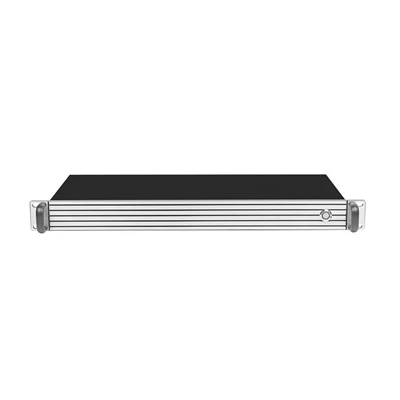
We can have a detailed discussion about your specific requirements. We’ll go over things like the distance you need to transmit the video, the number of cameras you’re going to use, and the level of video quality you’re aiming for. Based on that, we can recommend the best video transmitter for your situation.
Transmitter So, if you’re interested, don’t hesitate to reach out. We’re here to help you find the perfect video transmitter and make your project a success.
References
- Electronic Engineering: Principles and Applications, By Allan R. Hambley
- Wireless Communication Systems, By Andreas F. Molisch
Shenzhen TranScreen Technology Co., Ltd.
As one of the most professional transmitter manufacturers and suppliers in China, we have world-leading production equipment and strong manufacturing capabilities. Please feel free to buy customized transmitter made in China here from our factory. Contact us for quotation.
Address: No. 168, Baoyuan Road, Baoan Dst., SZ, China
E-mail: inquiry@transcreen.com
WebSite: https://www.transcreen.com/
