As a supplier of NMRV gearboxes, one of the most frequent questions I get from clients—whether they’re seasoned engineers sourcing components for a new conveyor line or small business owners putting together packaging machinery for their startup—is “What’s the input speed range I should be working with for these gearboxes?” It’s a valid, critical question, because running a gearbox outside its designed speed parameters doesn’t just hurt performance; it can lead to premature wear, overheating, or even catastrophic failure that derails a project and costs way more than getting the specs right upfront. Over the past 12 years in this industry, I’ve seen clients waste thousands of dollars ignoring or misunderstanding this range, so let’s break this down the way I explain it to every customer who walks through our door or sends that first inquiry. NMRV Gearbox
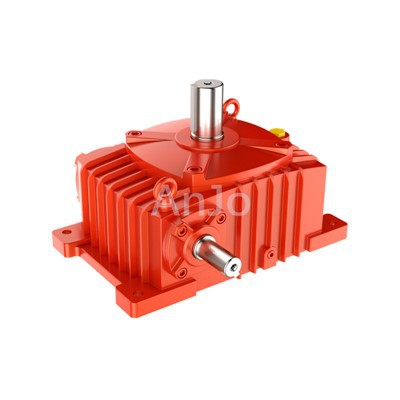
First, let’s ground this in what an NMRV gearbox actually is, for anyone who might be new to the space. NMRV stands for “Neuf–Macherie Réduite à Vitesse,” a French term that translates roughly to “reduced speed gear unit with high torque capacity” — though most of us in the industry just call them worm drive gearboxes, and NMRV is the standard series name for the compact, durable aluminum or cast iron units that dominate applications ranging from food processing to material handling, from packaging machinery to small-scale agricultural equipment. Their design uses a worm (the drive component, which is connected to the input shaft) that meshes with a worm wheel (the driven component on the output shaft), and that worm-and-wheel geometry is the single biggest factor that defines its input speed range.
Now, to the core question: the general industry-standard input speed range for NMRV gearboxes is 1,000 RPM to 1,500 RPM. But here’s where I have to hit pause — that’s a baseline, not a hard rule. It’s impossible to give a one-size-fits-all number, because every unit’s exact range depends on three key variables: the size of the gearbox (NMRV comes in sizes from 0.03 kilowatt capacity up to 7.5 kilowatt and beyond, with model numbers ranging from NMRV 025, the smallest, to NMRV 150 and higher for heavy-duty use), the material it’s made from (aluminum units are lighter, better for low-load indoor applications, while cast iron holds up better to higher speeds and heavy torque), and the ratio of the gearbox. Ratio, by the way, is the number that tells you how much the speed is reduced — a 10:1 ratio means the output speed is 1/10th of the input speed, a 100:1 is 1/100th, etc. Ratio directly ties into input speed, too, because higher ratio gearboxes run hotter if pushed beyond their sweet spot.
Let me walk through that with real examples from our own inventory, so you can see how this plays out. Take our smallest NMRV 025 model, the one we use for light-duty applications like driving small conveyor rollers or electric gate operators. Its recommended input speed is strictly capped at 1,200 RPM. Push it faster than that, and two things happen immediately: the worm, which spins at the input, generates too much friction on the aluminum housing, leading to rapid overheating that breaks down the lubricant, and the gear teeth start to wear unevenly because the design isn’t engineered to dissipate heat at higher speeds. On the flip end, our largest NMRV 150 cast iron gearbox, built for heavy-duty material handling and mining equipment, is rated for up to 1,800 RPM. The cast iron construction handles the extra heat and stress, and the larger distance between the worm and worm wheel means less friction at higher input speeds. That’s a tangible, real difference I can point to on our showroom floor, not just a textbook number.
Then there’s the ratio factor, which trips up so many first-time buyers. A lot of people assume a higher ratio is always better for low output speed, but if you pair a high ratio NMRV gearbox with too high an input speed, you’re asking for trouble. For example, our NMRV 075 gearbox, which we use for medium-duty packaging machinery, has two common ratios: a 20:1 and a 100:1. The 20:1 unit can safely take an input speed of 1,500 RPM — that’s the sweet spot for that balance of speed and torque. But the 100:1 version of the same NMRV 075? We cap its input speed at 1,200 RPM. Why? Because a higher ratio means the worm is spinning faster relative to the output, and that extra spin, paired with the tighter gear mesh needed for a high reduction, creates more heat. Run that 100:1 at 1,500 RPM, and within a few hundred hours of operation, the lubricant will degrade, the worm will wear, and the gearbox will lose torque capacity — often just when a production line is ramping up, leading to costly downtime.
I always emphasize to clients that these ranges aren’t arbitrary. They’re calculated based on two critical limiting factors for NMRV gearboxes: heat generation and load capacity. Worm drive gearboxes rely on oil lubrication, and the viscosity and type of oil (synthetic vs. mineral) is tailored to the speed range. If the input speed is too high, friction spikes, oil temperature rises, and the oil can’t protect the gears anymore. If the input speed is too low? Wait, you might be asking — did I mention a lower limit? Yes, there is a lower limit, though it’s less strictly enforced than the upper cap, because running too slow just means the gearbox doesn’t generate enough heat to keep the lubricant flowing properly, leading to seal leaks or gear rust over time. For most NMRV gearboxes, the minimum recommended input speed is around 500 RPM, though for heavy-duty cast iron units, that can drop to 300 RPM, since the thicker lubricant in those larger units circulates more easily at slower speeds.
A common mistake I see: clients come to me with a motor they already have, and they want to pair it with an NMRV gearbox without checking the input speed of either. Last year, a food processing client brought in a 2,000 RPM 3-phase motor that they wanted to use with a line of NMRV 050 gearboxes for their bottle capping line. That’s a mismatch right there — the NMRV 050 is rated for 1,500 RPM max. I explained that if they just bolted the motor directly to the gearbox, the gearbox would overheat in less than an hour, and they’d have to replace half their line’s gearboxes within six months. Instead, we worked out a solution: we added a small, low-cost motor pulley reducer that cut the motor’s speed down to 1,450 RPM, right at the recommended input speed for their NMRV 050 units. That client’s line has been running for 18 months with zero gearbox issues, and they’ve referred two other food processing clients to us since — that’s the kind of problem-solving that matters more than just selling a product.
Another edge case I get asked about: what if my application needs an input speed outside that 1,000–1,800 RPM range? Can we adjust something? The short answer is, not usually, but there are workarounds. If a client has a lower input speed, say 200 RPM, for a custom agricultural applicator, we can size a larger NMRV gearbox with a lower ratio that can handle that slow input speed without overheating or seizing. If a client needs a slightly higher input speed, like 2,000 RPM, for a specialized conveyor system, we can offer high-speed NMRV gearboxes made with special heat-treated alloy steel for the worm and worm wheel, which can dissipate extra heat and handle the higher RPM, though that’s a custom order and costs a bit more than our standard units. We never recommend modifying a standard NMRV gearbox to run outside its rated input speed — that’s a surefire way to void the warranty and create safety hazards, since a failed gearbox can cause machinery to stop unexpectedly, leading to worker injuries or product damage.
Now, let’s talk about how to verify the input speed for a specific gearbox, because that’s what I recommend clients do before they place an order. Every standard NMRV gearbox we supply has its input speed rating printed on the model nameplate, right alongside the ratio and torque rating. If you’re working from a datasheet, you’ll see a line that says “Max Input Speed” or “Rated Input Speed” — that’s your number. If you’re not sure how to calculate the actual input speed your motor will produce, or how to adjust it to match the gearbox, our team is always happy to help. We don’t just sell gearboxes; we help our customers match the right gearbox to their application, which means checking input speed, ratio, torque, and environmental factors to make sure everything works together.
Environmental factors matter too, by the way — I can’t leave that out. If your gearbox is going to be used in a hot climate, like a factory in the desert where ambient temperatures hit 40°C (104°F) or higher, you need to derate the input speed a bit. Those extra ambient temperatures add to the heat generated by the gearbox, so running it at 1,400 RPM instead of 1,500 RPM will prevent overheating. If it’s used in a cold climate, below 0°C (32°F), you can usually run it a bit higher than the rated input speed, since thicker lubricant at cold temperatures creates less friction. That’s another nuance most first-time buyers don’t consider, and it’s the difference between a gearbox that lasts 5 years and one that dies in 6 months.
Over the years, I’ve built our business on being transparent about these specs, not just selling the cheapest gearbox available. Too many suppliers will just quote a generic input speed range without explaining how size, ratio, and environment change that, leading to unhappy customers. A few months ago, a small e-commerce client came to us after buying NMRV gearboxes from another online supplier. Their input speed was way too high, so the gearboxes started smoking after two weeks. They told us the other supplier just sent them a chart that said “1,000–1,500 RPM” and didn’t mention that their high-ratio units could only take 1,200 RPM max. We replaced their gearboxes with the correct size, adjusted their motor speeds, and now they’re a repeat customer for all their packaging machinery parts. That’s the kind of trust you build when you’re honest about the limits, not just pushing a sale.
So to wrap this up, let’s cut to the practical takeaways: the standard input speed range for most standard NMRV gearboxes is 1,000 RPM to 1,500 RPM, with a hard upper cap for standard units of around 1,800 RPM only for large, heavy-duty cast iron models. This range adjusts based on gearbox size, ratio, material, and operating environment. Running a gearbox outside this range doesn’t just hurt performance — it voids warranties, causes downtime, and creates safety risks. If you’re working on a project and not sure what input speed your NMRV gearbox needs, don’t guess. Reach out, ask questions, work with a supplier that understands not just the parts, but how they work together.

If you’re sourcing NMRV gearboxes for a new project, replacing an old unit, or troubleshooting a current setup, our team is here to help you match the right gearbox to your exact needs. We’ve worked with clients across industries, from small startups to large manufacturing facilities, and we’ll walk you through every step of checking input speed, ratio, and specs to make sure you get a gearbox that runs reliably for years. Don’t let a wrong speed choice derail your project — connect with our team today to discuss your requirements.
Customized Motor References
ISO 10643:2018, Plain planetary gear units for general industrial applications — Nominal data, ratings, and life limits
AGMA Standard 6110-A17, Worm gear rating practice for gear units
NORD DRIVESYSTEMS Application Note: NMRV Gearbox Speed and Torque Calculations
Hangzhou ANG Drive Co., Ltd.
As one of the most professional nmrv gearbox manufacturers and suppliers in China, we’re featured by quality products and good service. Please rest assured to wholesale custom made nmrv gearbox from our factory. Good service and quality products are available.
Address: No.185, Jincheng Rd., Hangzhou 311202, China
E-mail: export2@angdrive.com
WebSite: https://www.anjodrive.com/
