If you’ve ever stepped into a factory floor at 2 a.m., when the only sounds are the low hum of robotic arms, the whir of conveyor belts, and the steady click of sensors transmitting data back to a control room, you’ve probably overlooked the quiet workhorses holding it all together: industrial communication cables. For over a decade, I’ve been part of the team supplying these cables to facilities across North America, and the question I get asked most often isn’t “How much does a cable cost?”—it’s “Do different industries really need different kinds of cables?” The short answer is a resounding yes. Anyone who thinks a single cable can work for a food and beverage plant, a oil refinery, and a wind farm has never spent a day troubleshooting a line that failed because it couldn’t handle the unique demands of its environment. Industrial Communication Cables
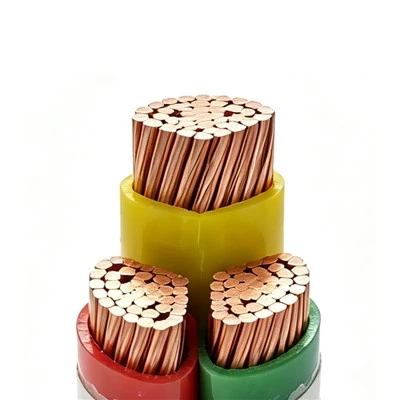
Let’s start with the food and beverage industry, a space where precision and sanitation aren’t just buzzwords—they’re non-negotiable. A few years back, we had a customer that runs a large dairy processing plant in Wisconsin. They came to us panicking because their regular Ethernet cables kept failing after only three months of use. Turned out, the problem wasn’t the cable itself—it was the environment. Their washdown crews use high-pressure hoses and harsh, chemical cleaners every night to prevent cross-contamination between batches of milk and cheese. Standard office-grade cables aren’t rated for that kind of abuse. Their outer jackets, usually made of PVC, break down when exposed to bleach, caustic soda, and hot water. They also harbor bacteria and mold, which is a huge health risk for a facility that produces food for sale. So what did we supply them with? We recommended cables with a special thermoplastic elastomer (TPE) jacket that’s both chemical-resistant and smooth enough to wipe down completely without trapping grime. We also had to make sure the cable was rated for IP67 ingress protection, meaning it can be fully submerged in water for short periods without damage. The old cables they were using might have worked in an office, but in a plant where every surface gets sprayed with 180°F water, they were just sitting ducks. That customer still works with us, and they recently expanded their line—this time, they specified the same type of cable for their new cheese aging room, where humidity is another constant threat. It’s not just about connectivity here; it’s about complying with FDA regulations and keeping products safe for consumers. One wrong cable choice could lead to a recall, which is why this industry’s requirements are more strict than most people realize.
Next, let’s shift gears to the oil and gas sector, an environment where one wrong cable can have catastrophic consequences. I remember a call a few years ago from a refinery in Texas that had experienced a small fire on one of their processing units. The investigation found that a damaged communication cable had sparked the blaze. Now, this isn’t the kind of place you use a run-of-the-mill polyvinyl chloride (PVC) cable. Oil refineries have volatile gases, high temperatures, and constant vibration from pumps and compressors. The cables here don’t just need to carry data—they need to be fire-resistant, and they can’t contribute to toxic fumes if they do catch fire. We supply these facilities with cables that have cross-linked polyethylene (XLPE) insulation, which can withstand temperatures up to 250°C and doesn’t release harmful smoke when exposed to flame. They also have a special armor layer, usually made of steel, that protects them from physical damage from heavy equipment or falling debris. The refinery we worked with opted for our explosion-proof (XP) rated cables for their drilling platforms, which are rated to contain any internal arcing so it doesn’t ignite the surrounding gas. One of the biggest challenges in oil and gas is also the distance: pipelines can stretch for miles, and data has to be transmitted over long distances without signal loss. That’s why we also supply fiber optic cables for these applications—they’re immune to electromagnetic interference (EMI), which is a huge problem in facilities with so much heavy machinery that generates electrical noise. A metal cable might work, but it would have constant signal dropout, which would be a disaster for monitoring pipeline pressure or detecting leaks.
Now, let’s talk about the renewable energy industry, specifically wind farms. These are some of the harshest environments on Earth for cables—think open plains, salt air near coastal wind farms, and extreme temperatures ranging from -40°C in winter to 40°C in summer. I’ve worked with a wind farm operator in Oklahoma who had issues with their turbine cables failing every two years. The original cables they installed were not rated for extreme cold, and when the temperature dropped, the outer jacket cracked, allowing moisture to get in and short out the connections. For wind turbines, the cables aren’t just on the ground—they run up the 300-foot towers, connecting the nacelle (the top part with the blades) to the base where the control system is. These cables have to bend repeatedly as the blades move, so flexibility is another key requirement. We started supplying them with cables that have a thermoplastic polyurethane (TPU) jacket, which is both cold-resistant (down to -50°C) and abrasion-resistant, and has a high tensile strength to handle the constant movement. For coastal wind farms, we add a layer that resists salt corrosion, since salt air breaks down most standard jackets over time. Another thing about wind farms: they need very fast, reliable data transmission between each turbine and the central control room. If a turbine’s pitch sensor fails, it can damage the blades, leading to costly repairs. So these cables have to support high-speed Ethernet, usually up to 10 Gbps, to send real-time data about wind speed, blade position, and power output. You can’t use a slow, old-fashioned serial cable here; the turbines need to communicate quickly to adjust their operation and prevent damage.
What about manufacturing, specifically automotive assembly lines? That’s another industry with unique cable needs. A friend of mine runs a car plant in Detroit, and he told me that their old control cables kept failing because of the constant movement of the robotic arms on the assembly line. These arms move back and forth hundreds of times a day, pulling and twisting the cables. Standard cables have rigid conductors that break after a lot of bending, leading to downtime that costs the plant thousands of dollars every hour. For this application, we supply chain-flexible cables, sometimes called “robot-grade” cables, with fine-stranded copper conductors that can bend millions of times without breaking. They also have special insulation that resists oil and grease from the machinery, since assembly floors are full of hydraulic fluids and lubricants. The key here is cycle life: these cables have to withstand up to 10 million bending cycles without any loss of signal. If a cable fails on an assembly line, it stops production, which is why automotive manufacturers are willing to pay a little more for a cable that’s built to last. I remember one plant that switched to our robot cables and reduced their cable-related downtime by 80% in the first year. That kind of reliability is priceless for a facility that produces a thousand cars a day.
Now, let’s address a common misconception: some people think that as long as a cable carries data, it’s fine. But when you’re dealing with industrial environments, “carries data” isn’t enough. Let’s talk about electromagnetic interference (EMI) and radio frequency interference (RFI), which are big problems in industries like mining and steel production. Steel mills have huge electric arc furnaces that generate massive amounts of electrical noise, which can corrupt data in standard copper cables. A few years ago, we worked with a steel mill in Pennsylvania that was having issues with their sensor data being misread, leading to improper furnace operation and poor quality steel. The solution here was to shielded cables, specifically those with a double shield: an aluminum foil shield for high-frequency interference and a braided copper shield for low-frequency noise. We also recommend fiber optic cables for the most EMI-heavy areas, since they don’t use electrical signals at all—they use light, so they’re completely immune to interference. In mining, it’s a different mix of challenges: underground mines have high humidity, explosive gases, and also heavy vibration from haul trucks. The cables here need to be flame-resistant, flexible, and also protected against rodent damage (yes, that’s a real issue in underground tunnels!). We supply mines with armored cables that have a steel core and a special jacket that’s resistant to both moisture and rodent teeth.
Over the years, I’ve learned that the best industrial communication cable isn’t the most expensive one—it’s the one that’s tailored to the specific needs of the industry, and even the specific environment within that industry. A cable that works for a food plant’s washdown area will rot in a wind farm’s salt air. A cable that works for a steel mill’s furnace will catch fire in a dairy plant. That’s why we don’t sell “one-size-fits-all” cables. When a customer comes to us, we don’t just quote a price—we ask questions: What’s the operating temperature range? Is there exposure to chemicals, water, or flame? How much movement is the cable going to see? Is EMI a problem? How fast do you need to transmit data? These questions aren’t just sales pitches—they’re the difference between a cable that works for five years and one that fails in five months.
I once had a customer in the pharmaceutical industry come to us because their old cables were failing near their sterile filling lines. Pharmaceuticals have very strict requirements for cleanliness, and their filling machines run 24/7. The old cables they were using had small gaps in their jacket that allowed moisture and bacteria to get inside, which could contaminate their product. We supplied them with hermetically sealed cables, which have no gaps and are completely airtight, so no contaminants can get inside. This was a game-changer for them, as it eliminated the risk of product contamination and allowed them to keep their lines running without unexpected stops.
The industrial communication cable market is not a commodity market, no matter what some people say. Each industry has evolved its own set of challenges, and cable manufacturers have had to adapt to meet those challenges. As industries become more automated and connected, those requirements are only going to get more specific. Wind farms are moving to taller turbines, which need cables that can handle more extreme conditions and longer distances. Food plants are adopting more robotic systems, which need cables that are flexible and easy to clean. Oil and gas is moving to deeper offshore drilling, which requires cables that can withstand high pressure and salt water.

At the end of the day, every customer who needs industrial communication cables has a unique set of challenges, and the right cable is the one that solves those specific challenges. If you’re looking for a cable supplier that understands the unique needs of your industry and can help you find the right solution, feel free to reach out to our team. We work with facilities across all industries, from food and beverage to renewable energy, and we’ve helped countless customers reduce downtime, improve safety, and lower their long-term costs. Don’t settle for a cable that’s just “good enough”—get one that’s built for your environment, and you’ll save yourself from costly failures down the line.
Industrial Control Cables References
- National Sanitation Foundation (NSF). (2021). Standard 51: Food Equipment Materials.
- Underwriters Laboratories (UL). (2022). UL 2250: Standard for Industrial Control and Communication Cables.
- International Electrotechnical Commission (IEC). (2020). IEC 60079: Explosive Atmospheres.
- Windpower Engineering & Development. (2021). “Cable Selection for Harsh Wind Turbine Environments.”
- Society of Automotive Engineers (SAE). (2022). SAE J2037: Performance of Flexible Cables for Robotic Applications.
Huayu Cable Group Co., Ltd.
As one of the most professional industrial communication cables manufacturers and suppliers in China, we are committed to providing high quality custom service and OEM&ODM service to global clients. Please rest assured to wholesale bulk durable industrial communication cables made in China here from our factory.
Address: High-tech industrial Zone, Wuwei, Wuhu City, Anhui, China
E-mail: sales@huayucablegroup.com
WebSite: https://www.huayucablegroup.com/
