If you’ve ever been in the market for grinding media—whether you’re operating a cement plant, a mineral processing facility, or even a paint factory—you know it’s not just about grabbing a random ball off the shelf. Ask any process engineer, and they’ll tell you the right grinding media cuts down on energy waste, speeds up material processing, and even extends the life of your mill liner. For years, I’ve worked with all kinds of facilities, helping them pick the right media for their specific grind, and one of the first questions I always get is: “What types of grinding media are even out there?” Today, I’m breaking down the most common ones, how they work, and when you should reach for each one (plus, a quick note at the end about how we can help if you’re sourcing reliable stuff). Grinding Media
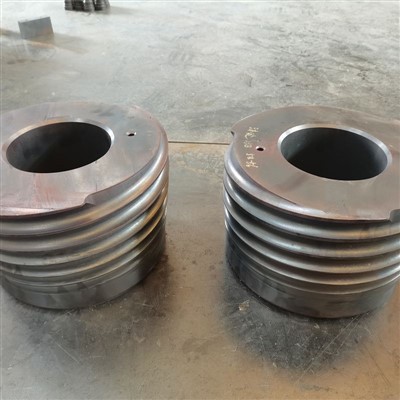
First up, let’s start with what most people picture when they hear “grinding media”: steel balls. But not all steel balls are created equal—there are two main categories here: forged steel balls and cast steel balls. Forged balls are made by heating a steel rod, hammering it into a ball shape, and then quenching it to harden the surface. I swear by these for high-impact applications because their grain structure is super dense—no gaps or weak spots that would cause them to crack mid-grind. We supply forged balls to a few gold mines in Nevada, and the engineers there tell me they last 20-30% longer than cast balls in their SAG mills. The downside? They’re a little more expensive upfront, but the lower replacement cost and less downtime usually balance it out.
Cast steel balls, on the other hand, are made by pouring molten steel into a mold. This method lets us make all kinds of sizes (from tiny ½-inch balls up to 6-inch behemoths) pretty easily, and we can tweak the hardness by adding elements like chromium or manganese. For example, high-chrome cast balls are perfect for abrasive materials like iron ore because the chromium forms a hard surface layer that resists wear. I’ve seen these used in coal-fired power plants for their pulverizers too—they hold up well to the constant beating from coal particles. One thing to watch with cast balls, though: cheap ones that skip the heat treatment might break too fast, so always ask about their hardness rating (we publish ours on the spec sheets, no guesswork here).
Next, moving away from steel, we have stainless steel grinding media. These are non-corrosive, which is a huge deal if you’re working with materials that can get contaminated by rust. Think about food processing (like grinding cocoa or spices), pharmaceuticals, or even ceramics—you can’t have metal flaking into your final product. We supply small batches of 304 and 316 stainless balls to a craft chocolate maker in Oregon, and they say it’s the only media that doesn’t leave a metallic aftertaste in their dark chocolate. The tradeoff here is that stainless is softer than carbon steel, so it wears faster in high-impact mills. It’s not for primary grinding, but it’s perfect for finishing passes where contamination is a no-go.
Then there’s another steel-adjacent option: iron grinding media, specifically cast iron balls. Wait, why not just use steel? Cast iron is cheaper, and it’s naturally more brittle than steel, so it actually shatters a little easier when it hits ore or other materials. That might sound like a bad thing, but it’s actually useful for some applications—like when you want to produce a fine, consistent grind in a shorter amount of time. We sell gray iron balls to a few small-scale cement plants in Texas that grind clinker for low-strength concrete; they tell me the faster breakage means they don’t have to run their mills as long, saving on electricity. The catch? Cast iron is more prone to rust if it’s not coated, so you have to keep it dry before use.
Now, for all the industries that can’t use metal media—we’re talking about things that are highly corrosive, or even reactive—there are ceramic grinding media. This is a broad category, with a few key types you should know. First, alumina ceramic balls. These are made from aluminum oxide, and they’re super hard, non-corrosive, and inert. They don’t react with almost any material, which makes them ideal for pharmaceutical grinding, ink manufacturing, and even battery materials (yes, lithium-ion batteries need finely ground ceramics too!). We have a client that makes lithium cathode materials in North Carolina, and they switched to alumina balls because their old metal media was introducing impurities that messed with battery performance. The downside? They’re brittle, so you can’t use them in primary grinding or high-impact mills—save them for fine grinding and mixing.
Another ceramic type is zirconia grinding media, which is a mix of zirconium oxide and sometimes yttria to boost stability. This is the heavy hitter of ceramics—way harder and denser than alumina, so it can handle more impact without breaking. We supply zirconia beads to a paint company in Ohio that uses horizontal bead mills; they grind titanium dioxide pigment, which is super abrasive. The zirconia balls wear less than alumina here, so they get longer life, and the higher density means they impart more energy to the pigment, cutting down on grinding time. The price is steeper, but for high-value pigments or advanced materials like semiconductors, it’s worth every penny.
Wait, did I mention grinding beads? A lot of people confuse beads with balls, but beads are smaller—usually under 10mm, and they’re made for vertical or horizontal bead mills, not the big ball mills that use 2-inch+ balls. There’s also glass grinding media, which I almost forgot! Glass beads are cheap, lightweight, and non-corrosive, but they’re soft, so they only work for soft materials like clay, soap, or some food products. We used to supply a lot of glass beads to a soap manufacturer that grinds natural oils and fragrances; they’re perfect for that because they don’t contaminate the product, and they’re way cheaper than ceramic. But if you try to use them on hard rock, they’ll wear down in a week.
Oh, and one more type—for the super specialized stuff: synthetic grinding media like nylon or rubber-coated balls. These are used when you need a super clean grind, or when you’re working with fragile materials that would get scratched by metal. For example, we have a lab client that grinds tiny semiconductor wafers; their nylon balls are soft enough to not scratch the wafer surface, and non-contaminating. They don’t last as long as steel or ceramic, but for lab-scale work, that’s not a big deal.
Now, let’s talk about how to pick the right one, because it’s not just about the material. You have to consider the mill type (ball mill vs. bead mill, impact mill vs. attrition mill), the hardness of your feed material (hard ore needs hard media, soft clay doesn’t), the desired final particle size (fine grinding needs smaller, denser media), and most importantly, contamination risks (food, pharma, electronics = no uncoated metal). A common mistake I see is buying the cheapest media possible, only to realize it wears out in a month and you’re replacing more media than you saved. Or using a high-hardness media for a soft material, which wastes energy because the media isn’t imparting enough force.
Here’s the thing: as a grinding media supplier, we don’t just sell you a box of balls and bounce. We work with you to figure out what your process needs—we’ll ask about your mill, your material, your final product specs, and even your budget. We’ve tested media for hundreds of clients, so we know what works for a gold mill in Canada vs. a paint factory in Mexico vs. a pharmaceutical lab in Germany. If you’re tired of media that wears too fast, breaks too often, or contaminates your product, that’s where we come in. We supply all the types I talked about—forged steel, cast steel, stainless, ceramic, zirconia, glass, even nylon-coated—with custom sizes and hardness ratings to fit your exact setup.
Before I wrap this up, a quick note: if you’re new to sourcing grinding media, don’t hesitate to ask questions. A good supplier will send you free samples to test in your mill for a week, so you can see the wear rate and the final grind quality before you place a big order. We do that all the time—no hoops to jump through, just send a sample of your material and tell us what mill you use, and we’ll pick a media to test.
Now, let’s go over this real quick to make sure I didn’t miss anything. The main types are steel (forged, cast, stainless, cast iron), ceramic (alumina, zirconia), glass, and synthetic (nylon, rubber-coated). Each has its own use case, pros, and cons, and picking the wrong one can cost you time, money, and product quality.

If you’re in the market for reliable grinding media that fits your specific process, we’re here to help. We don’t push the most expensive stuff—we push what works for you, whether that’s cheap glass beads for a soap plant or high-chrome cast balls for a hard rock mine. We ship everywhere, keep consistent stock so you don’t run out mid-production, and our team can walk you through every step from sample testing to delivery. So if you’re tired of dealing with media that’s not holding up, or you’re just not sure what type you need, reach out to our team to talk through your needs.
Coupling Atmaca, M., & Güven, O. (2017). Grinding media types and their effect on grinding performance. Minerals Engineering, 112, 45-52.
Jones, M. H., & King, R. P. (2012). Selection of grinding media for mineral processing operations. International Journal of Mineral Processing, 102-103, 1-10.
Smith, A. B., & Lee, C. J. (2020). Non-metallic grinding media for contamination-sensitive applications. Journal of Applied Manufacturing Processes, 22(3), 412-419.
Shenyang Muren Machinery Co., Ltd.
We are one of the most professional grinding media manufacturers and suppliers in China, featured by quality products and good service. Please rest assured to wholesale customized grinding media at competitive price from our factory. Contact us for more details.
Address: No.16 Nansan Road, Shenyang Jinhai Economic Zone, Liaoning Province, China
E-mail: mulunjixie@163.com
WebSite: https://www.symuren.com/
