If you’ve ever spent time navigating with a paper map—whether it’s a hiking trail guide, a city transit map, or a vintage road map of a place you love—you know how fragile those sheets of paper can be. Rain, spilled coffee, constant folding and unfolding, even just the natural wear of being pulled out of a backpack or glove compartment can turn a once-useful map into a crumpled, illegible mess over time. That’s why so many people reach for laminating films to protect paper maps, and as a supplier of Optical Crystical PET Thermal Laminating Film, I get asked this question all the time: Is this film actually a good choice for laminating maps? Optical Crystical PET Thermal Laminating Film
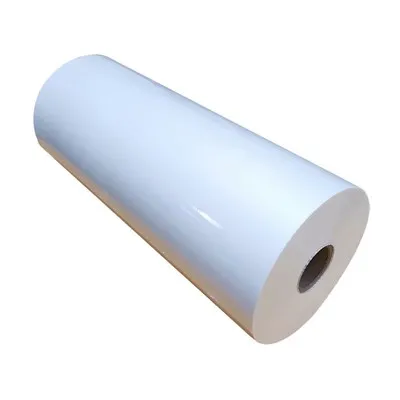
First, let’s break down what Optical Crystical PET Thermal Laminating Film is, because not all laminating films are created equal. Unlike cheaper PVC-based films that yellow over time or leave a sticky residue if you ever need to remove them, our film is made from high-grade polyethylene terephthalate (PET), processed to have an ultra-clear, optical-grade surface that’s almost indistinguishable from glass. It’s a thermal laminating film, which means it bonds to paper when you run it through a standard thermal laminator—no messy adhesives or glues that can bleed through, and it creates a permanent, airtight seal once properly applied. But when it comes to maps, which have their own unique needs, this is where the conversation gets specific.
Let’s start with the biggest concern for map users: durability. Maps aren’t just lying on a table—they’re carried around, folded, crumpled, exposed to moisture, and sometimes even subjected to rough handling in outdoor environments. Paper alone is terrible at this, so laminating is supposed to fix that. Our Optical Crystical PET film has a tensile strength that’s roughly 2-3 times higher than standard PVC laminating films, which means it resists tearing, stretching, and punctures far better. I’ve seen this firsthand with a customer who laminates backcountry trail maps for local hiking groups—they tell me that after a year of use, the maps laminated with our film have almost no visible scuffs, even when pulled over branches, dragged on gravel, or sprayed with rain. That’s a big win for outdoor use, but what about indoor maps, like those in libraries, museums, or office buildings? The same strength holds up against constant handling—people flipping through wall maps, guide maps in visitor centers, or even maps in textbooks won’t leave marks as easily as they would on unlaminated paper or paper laminated with cheaper films.
Next, clarity is non-negotiable for maps. A map’s entire purpose is to show streets, trails, landmarks, and contour lines with crisp detail. If the laminating film is foggy, has bubbles, or distorts the printed image, it’s useless. Our Optical Crystical film is processed to have a light transmittance rate of over 92%, which means it lets light pass through almost perfectly, with no yellowing or haze. I’ve tested this side-by-side with a competitor’s standard PET film—when laminated side by side, our film doesn’t soften the sharp edges of printed lines or wash out the colors of a topographical map. For vintage maps, which often have faded or delicate ink, this is especially important. The last thing you want is a protective film that makes a valuable old map harder to read. Some cheaper laminating films use a matte finish to reduce glare, but that can make fine text and small map details hard to see in bright light. Our film has a low-glare, anti-reflective coating that balances clarity and visibility—you don’t have to hold the map at a weird angle to read street names or trail distances, which is a huge plus for anyone trying to navigate in sunlight.
Moisture resistance is another key factor for maps, particularly outdoor ones. Paper absorbs water, which causes it to warp, crinkle, and in some cases, disintegrate. Our PET film creates a completely waterproof barrier when laminated correctly. I remember a customer who runs a small tour company in the Pacific Northwest—they laminate kayaking route maps for their guests, who often encounter sudden rain or splash the maps with river water. With our film, a quick wipe with a towel is all it takes to clean the map; there’s no water damage, no warping, and the ink never runs. Compare that to unlaminated maps, or maps laminated with vinyl films that can have small gaps if the seal isn’t perfect, and the difference is obvious. Even for indoor maps, this is useful—if a coffee is spilled on a laminated map, you can clean it without damaging the paper underneath, which saves a lot of hassle.
But here’s a question I get that’s a little more nuanced: Can you fold maps laminated with Optical Crystical PET film without damaging either the film or the map? This is a big one, because most maps are designed to be folded for portability. Some laminating films are too stiff, which makes folding difficult and can cause the film to crack along fold lines, or even tear the paper inside. Our film is calibrated to have a flexible, memory-friendly quality—it bends evenly along fold lines without cracking, and it retains its shape so the map doesn’t flop around or unfold on its own mid-hike or mid-trip. I’ve heard from multiple customers that they can fold a map laminated with our film exactly the same way they folded the original paper map, and after months of unfolding and refolding, the fold lines don’t fray or break. That’s not the case with many cheaper laminating films, which become brittle over time and crack along folds within a few uses.
Of course, no product is perfect, so I should be honest about where Optical Crystical PET film might not be the best choice for some maps. If you’re looking for a very thin, disposable map for a one-time event, like a festival map that will only be used for a day, our film is probably overkill—it’s designed for long-term use, not short-term. Also, if you plan to hand-laminate very large maps, like wall maps or building floor plans, you’ll need a laminator that can handle larger widths (our film comes in standard rolls up to 60 inches, so that’s manageable, but you can’t use a small portable laminator for maps that big). But for almost all maps that are meant to be durable, reusable, and easy to read, our film is more than suitable.
I also want to address a common misconception about laminating paper: some people worry that laminating will damage the original map, especially vintage or valuable ones. Our Optical Crystical PET film is adhesive-free? No, wait—correction, it has a heat-activated, acid-free adhesive layer that’s specifically formulated not to react with paper over time. That’s a crucial point. Many older laminating films used adhesives that contained acids, which over time would cause the paper to yellow, become brittle, or even stick to the film, making it impossible to remove without damaging the map. Our adhesive is pH-neutral, so it won’t degrade the paper or the ink on your map, even after years of storage. For valuable historical maps, this is a huge benefit—you’re not just protecting the map, you’re preserving it for future use.
I’ve had a lot of repeat customers who started with small orders for personal use—laminating their own hiking maps or kid’s school maps—and then came back to order bulk for their small businesses, like local tour companies, outdoor gear shops, or even schools that make classroom maps. One customer told me that they used to go through rolls of cheaper laminating film every month because it would crack, yellow, or bubble, but since switching to our Optical Crystical PET film, they only reorder every quarter. That’s the kind of feedback that tells us this film works for maps, because it solves the exact problems map users actually face.
So, to wrap this up: Yes, Optical Crystical PET Thermal Laminating Film is absolutely suitable for laminating maps, if you’re looking for a durable, clear, long-lasting solution that won’t damage your paper or ink. It stands up to the rough handling of outdoor use, resists moisture and tearing, keeps maps readable in bright light, and folds smoothly without cracking. It’s not the right choice for every single map, but for the vast majority of maps that are meant to be used regularly, carried around, and preserved over time, it’s one of the best options on the market.

If you’re a map maker, a tour company owner, a library curator, or just someone who wants to protect your personal maps, we can help you find the right roll size and thickness for your needs. Whether you’re laminating small pocket maps or large wall maps, our team can walk you through the best way to apply the film for a perfect seal every time. Don’t hesitate to reach out to discuss your specific project, ask questions about application, or get a sample to test for yourself. We’re here to help you keep your maps usable for years to come.
Embossing Thermal Laminating Film References
- ASTM International. (2020). Standard Test Method for Tensile Properties of Plastics. ASTM D638-20.
- Technical Association of the Pulp and Paper Industry. (2018). pH Measurement of Paper, Paperboard, and Related Materials. TAPPI T509 om-18.
- International Organization for Standardization. (2019). Plastics—Determination of Light Transmittance and Haze. ISO 13468-1:2019.
- Lamination Association. (2021). Best Practices for Thermal Lamination of Paper Products. LAM-STD-001.
- Outdoor Industry Association. (2022). Gear Durability Testing Report: Map Protection Solutions. OIA Research Series No. 12.
Yantai Hongqing Packing Material Co., Ltd.
Yantai Hongqing Packing Material Co., Ltd. is one of the most professional optical crystical pet thermal laminating film manufacturers and suppliers in China, also supports customized service. Welcome to wholesale advanced optical crystical pet thermal laminating film made in China here and get quotation from our factory. Quality products and reasonable price are available.
Address: Eastern Industrial Park, Taocun, Yantai, Shandong Province, China
E-mail: cindy@ythongguang.cn
WebSite: https://www.hqingnewmat.com/
