Hey there! I’m a supplier of CNC turned bushings, and I’m super stoked to chat about the different types of coatings available for these nifty little components. Coatings play a huge role in enhancing the performance, durability, and overall functionality of CNC turned bushings. So, let’s dive right in and explore the various options out there. CNC Turned Bushings

1. Zinc Coatings
Zinc coatings are one of the most common types used for CNC turned bushings. They’re popular because they’re cost – effective and provide decent corrosion resistance. When we apply a zinc coating to a bushing, it forms a protective layer on the surface. This layer acts as a barrier between the metal of the bushing and the surrounding environment, preventing rust and other types of corrosion from setting in.
There are different ways to apply zinc coatings. One common method is electroplating. In electroplating, the bushing is immersed in a bath of zinc ions, and an electric current is used to deposit the zinc onto the surface. The thickness of the zinc coating can vary depending on the specific requirements of the application. A thin coating might be suitable for less harsh environments, while a thicker coating is better for applications where the bushing will be exposed to moisture or chemicals.
However, zinc coatings do have some limitations. They may not be as effective in extremely corrosive environments, such as those with high levels of salt or acidic substances. Also, over time, the zinc coating can wear off, especially if the bushing is subject to high levels of friction.
2. Chrome Coatings
Chrome coatings are known for their excellent hardness and wear resistance. When a CNC turned bushing is coated with chrome, it becomes much more resistant to scratches, abrasions, and general wear and tear. This is particularly beneficial in applications where the bushing is in constant contact with other moving parts, like in a high – speed machinery setup.
Chrome coatings are also pretty good at providing corrosion resistance. The chrome layer forms a smooth and dense surface that is difficult for moisture and oxygen to penetrate. This helps to protect the underlying metal of the bushing from rusting.
The application of chrome coatings usually involves a process called chrome plating. Similar to electroplating zinc, the bushing is placed in a solution containing chromium ions, and an electric current is used to deposit the chrome onto the surface. The drawback of chrome coatings is that they can be more expensive compared to zinc coatings. Also, the chrome plating process can be a bit more complex and may require special equipment and expertise.
3. Nickel Coatings
Nickel coatings offer a good balance between corrosion resistance and wear resistance. They are often used in applications where the bushing needs to withstand both environmental factors and mechanical stress. Nickel coatings can be applied in different thicknesses, and they can be further enhanced by adding other elements to the nickel alloy.
One advantage of nickel coatings is that they can improve the appearance of the bushing. They give the bushing a smooth, shiny finish that not only looks good but also helps to prevent the adhesion of dirt and debris. Nickel coatings are also relatively easy to apply using electroplating techniques.
However, nickel coatings can be prone to cracking under high stress conditions. If the bushing is subjected to extreme forces or vibrations, the nickel coating may crack, which can then expose the underlying metal to corrosion.
4. PTFE (Polytetrafluoroethylene) Coatings
PTFE coatings are really popular because of their low friction properties. When a CNC turned bushing is coated with PTFE, it can move more smoothly against other surfaces, reducing the amount of energy required for operation and also minimizing wear. This is especially useful in applications where low friction is critical, such as in precision machinery or in applications where the bushing needs to move freely without sticking.
In addition to low friction, PTFE coatings are also highly resistant to chemicals. They can withstand exposure to a wide range of corrosive substances, making them suitable for use in chemical processing plants or other environments where the bushing may come into contact with harsh chemicals.
Applying a PTFE coating to a bushing usually involves a process of spraying or dipping. The downside of PTFE coatings is that they may not be as hard as some of the other coatings, like chrome or nickel. So, in applications where there is a lot of abrasive wear, the PTFE coating may wear off relatively quickly.
5. Black Oxide Coatings
Black oxide coatings are more about enhancing the appearance and providing a bit of corrosion resistance. They give the CNC turned bushing a sleek, black finish that looks really sharp. In addition to the aesthetic appeal, black oxide coatings create a thin layer on the surface of the bushing that can help to prevent light rusting.
The process of applying a black oxide coating is relatively simple. The bushing is immersed in a hot solution that contains chemicals which react with the metal surface to form the black oxide layer. Black oxide coatings are not as thick or as durable as some of the other coatings we’ve discussed. They’re more suitable for applications where the bushing is not going to be exposed to extreme conditions but still needs to look good and have some basic corrosion protection.
6. Ceramic Coatings
Ceramic coatings are on the high – end of the spectrum when it comes to performance. They are extremely hard and have excellent wear resistance. In addition, ceramic coatings can withstand high temperatures, making them ideal for use in high – heat applications, like in engines or industrial furnaces.
The application of ceramic coatings is a bit more complex. It often involves a process called thermal spraying, where ceramic particles are heated and then sprayed onto the surface of the bushing at high velocity. This creates a dense and hard ceramic layer.
The main drawback of ceramic coatings is their cost. They are much more expensive than other types of coatings, and the equipment and expertise required to apply them are also more specialized.
Which Coating is Right for You?
Choosing the right coating for your CNC turned bushings depends on a few factors. First, think about the environment in which the bushing will be used. If it’s a wet or corrosive environment, you’ll probably want a coating with good corrosion resistance, like zinc, chrome, or nickel.
Next, consider the mechanical requirements. If the bushing will be subject to a lot of friction or wear, a hard – wearing coating such as chrome or ceramic would be a better choice. And if low friction is important, then a PTFE coating might be the way to go.
As a supplier of CNC turned bushings, I’m here to help you make the right decision. I’ve got a lot of experience working with different coatings and applications, so I can offer some solid advice based on your specific needs.
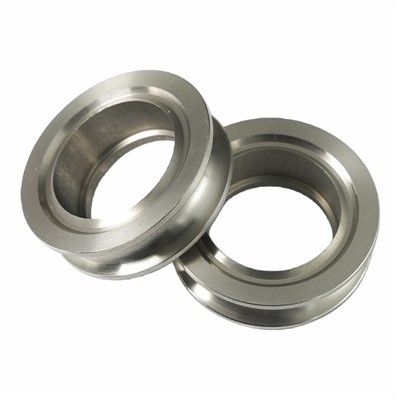
If you’re in the market for CNC turned bushings or have some questions about the coatings I’ve discussed, I’d love to hear from you. You can reach out to me to discuss your requirements and get a quote. Whether you’re a small – scale manufacturer or a large – scale industrial company, I’m ready to work with you to find the perfect solution for your bushing needs.
Aluminum Turned Parts Let’s have a chat and see how we can make your projects run smoothly with the right CNC turned bushings and coatings.
References
- ASM Handbook Volume 5: Surface Engineering
- Finishing Directory and Technology Guide
Huizhou Quanyi Precision Hardware Products Co., Ltd.
Address: Building A10, 7th Floor, Zhongchuangyingke 5G Industrial Park, Zhonghan Industrial Park, Tonghu Town, Huizhou City
E-mail: info@qycncturning.com
WebSite: https://www.qycncturning.com/
